SeaSwara·Places to visit
Within the hour · Udupi to Mangaluru

A lighthouse at dusk, an island made of stone.

This is our coast, and we are proud of it. Let us show you around — a lighthouse on black rock, an island made of stone, centuries-old places of every faith, and the stories people here grow up with. Settle in; it is a long and lovely walk.

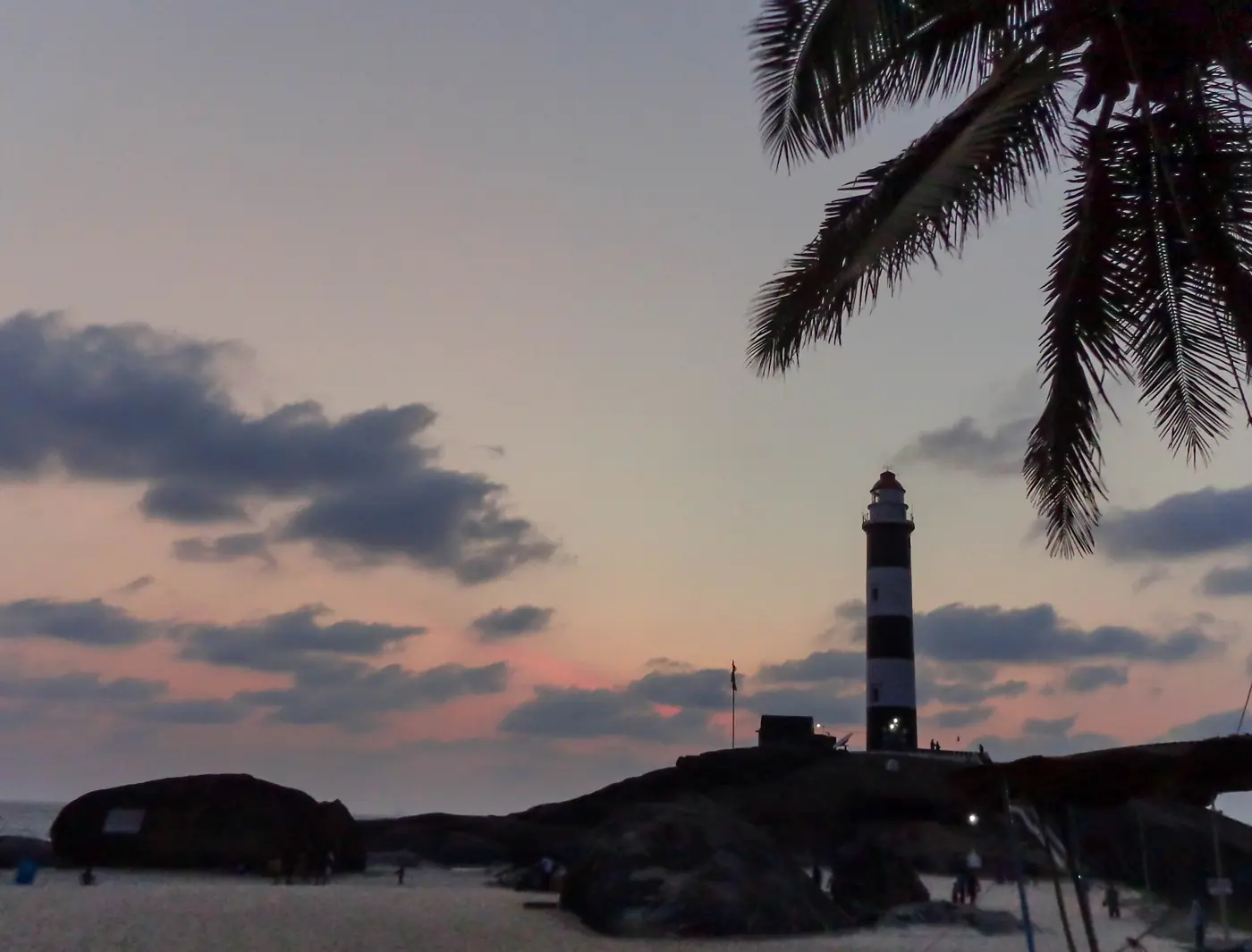
Kaup lighthouse on its rocks at dusk, twenty minutes from SeaSwara
Kaup lighthouse · twenty minutes northPhoto Vinay bhat · CC BY-SA 4.0
Udupi
35 minutes
Kaup lighthouse
20 minutes
St Mary’s Island
Boat, Oct–May
Blue Flag beach
In front
The shore · north and south

Every beach on this coast has its own temper.

Some are for swimming, some for sunsets, some for a crowd and a plate of bhel puri. Here is which is which, from the one in front of our gate to the city beach an hour south. Wherever you go: the Arabian Sea has a strong undertow, so swim only between the flags in daylight, and never during the monsoon.

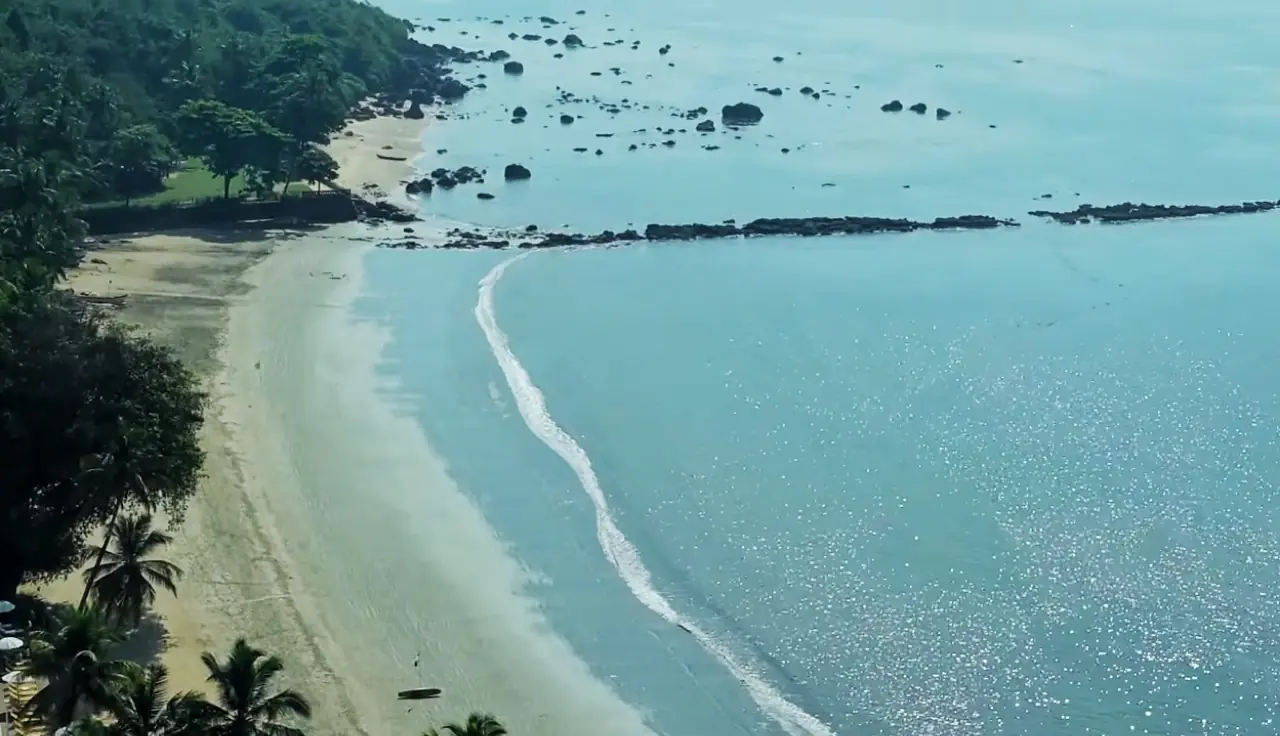
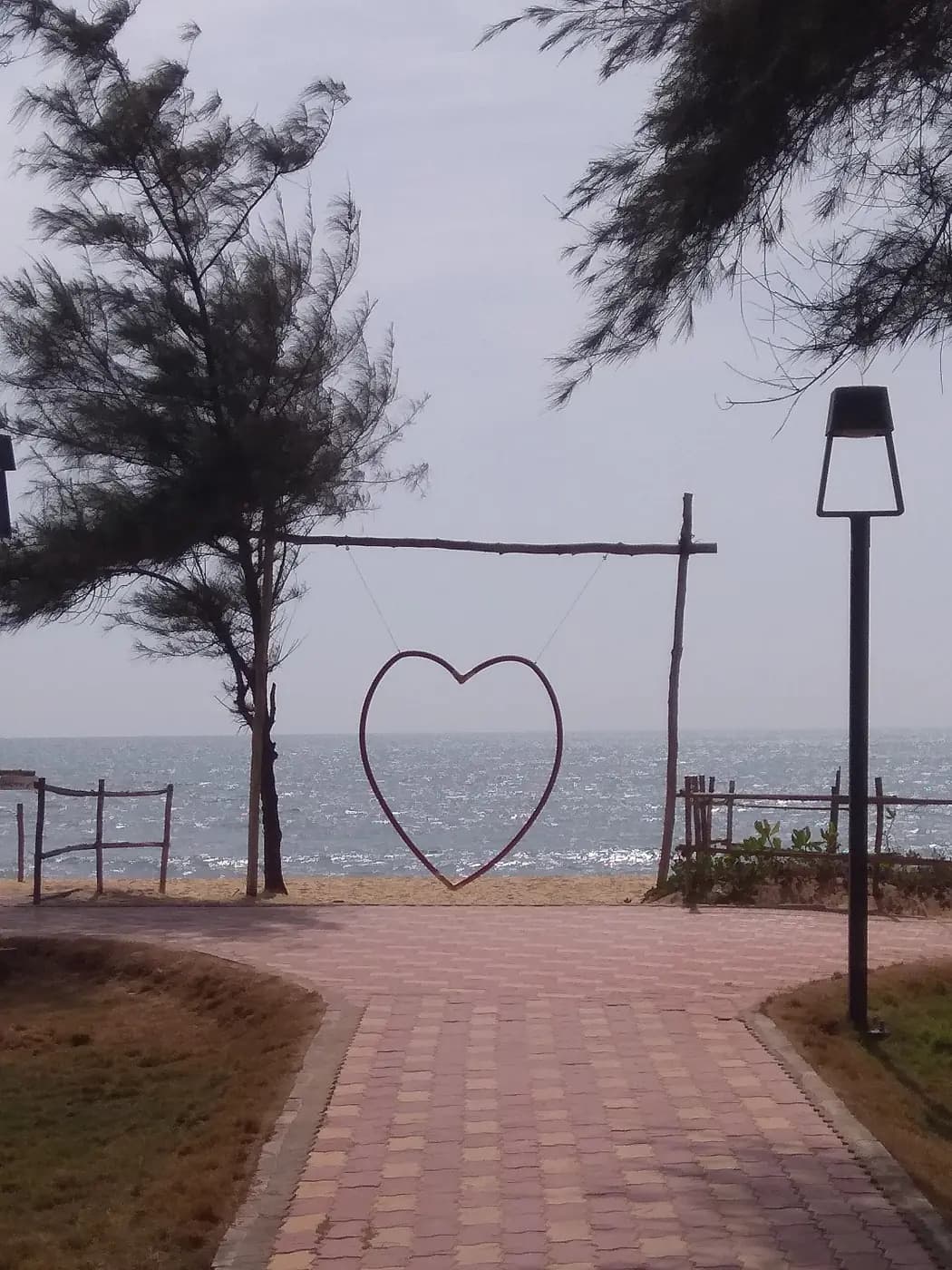
The heart-shaped swing on the promenade of the Blue Flag beach at Padubidri
Photo KR Sanjana Hebbar · CC0
Beach · In front of the house

Padubidri Blue Flag Beach

Before sunrise the rampani crews walk into the surf with a net that takes a whole village to haul. Two long lines of men lean back into the sand, singing to keep time, and for an hour the beach belongs to them. When the net finally comes in, silver and alive, the whole shore gathers to see what the sea decided to give.

In 2020 this beach became one of India’s first Blue Flag beaches — clean water, safe bathing, cared for by the people who live beside it. We are proud of that the way a family is proud of its front garden. It is the first thing we would show you, and it is right outside.
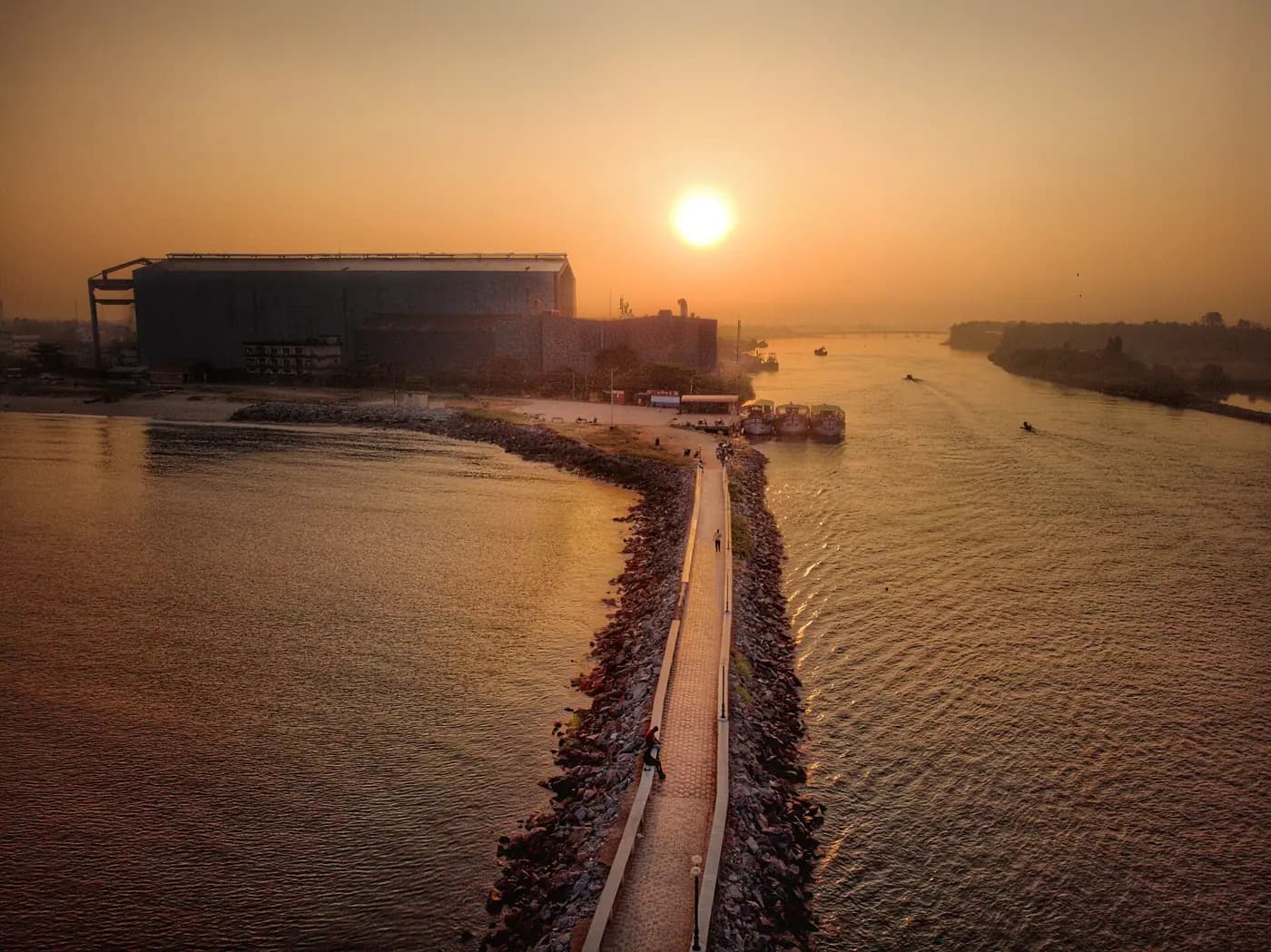
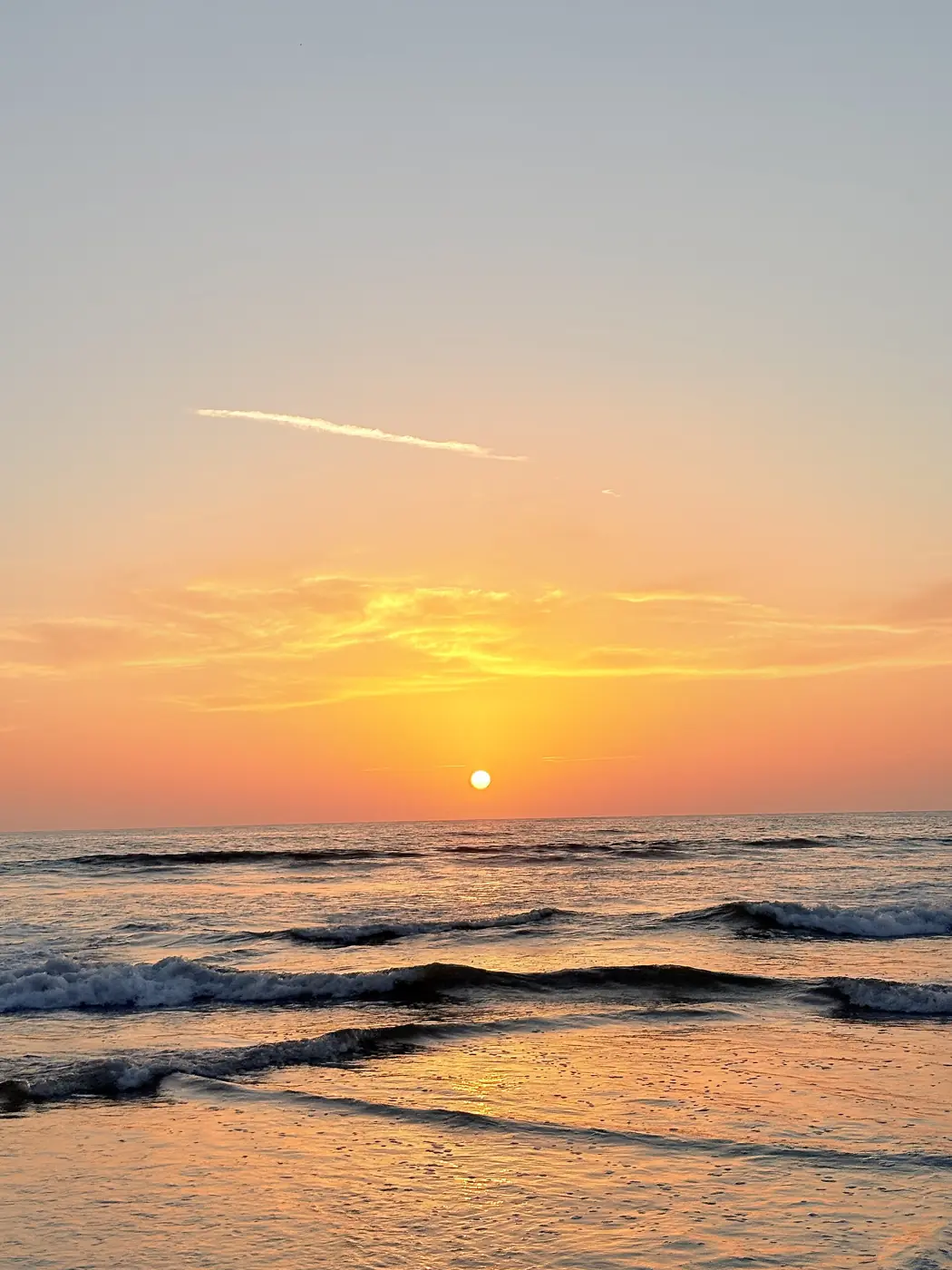
Kaup lighthouse silhouetted on its rocks at dusk
Photo Vinay bhat · CC BY-SA 4.0
Lighthouse · 14 km · 20 min

Kaup Beach & Lighthouse

The lighthouse at Kaup has stood on its black rocks since 1901, when ships working the pepper and timber coast needed a light to keep them off this shore. More than a century later it still turns every night, and fishermen out at sea still find their way home by it.

Climb the spiral stair and the whole coast opens up: the long beach running north toward Udupi, the palms, the rocks where the waves throw white into the air. At sunset the tower turns gold, then pink, then a dark shape against a burning sky — and then, quite suddenly, the lamp comes on.

Sunrise over the breakwater and harbour mouth at Malpe
Photo KshitizBathwal / Skyscape Photography · CC BY-SA 4.0
Beach · harbour · 30 km · 40 min

Malpe

Malpe is where Udupi goes to the sea. Its harbour is one of the busiest fishing ports on the whole west coast, and at dawn it is a theatre: hundreds of painted trawlers nosing in, ice being smashed, baskets of mackerel and pomfret passed hand to hand, auctioneers shouting prices faster than you can follow.

Walk a little further and the town softens into a long golden beach and the sea walk — a breakwater that runs out into the Arabian Sea, where half of Udupi comes to watch the sun go down with a plate of churmuri in hand.

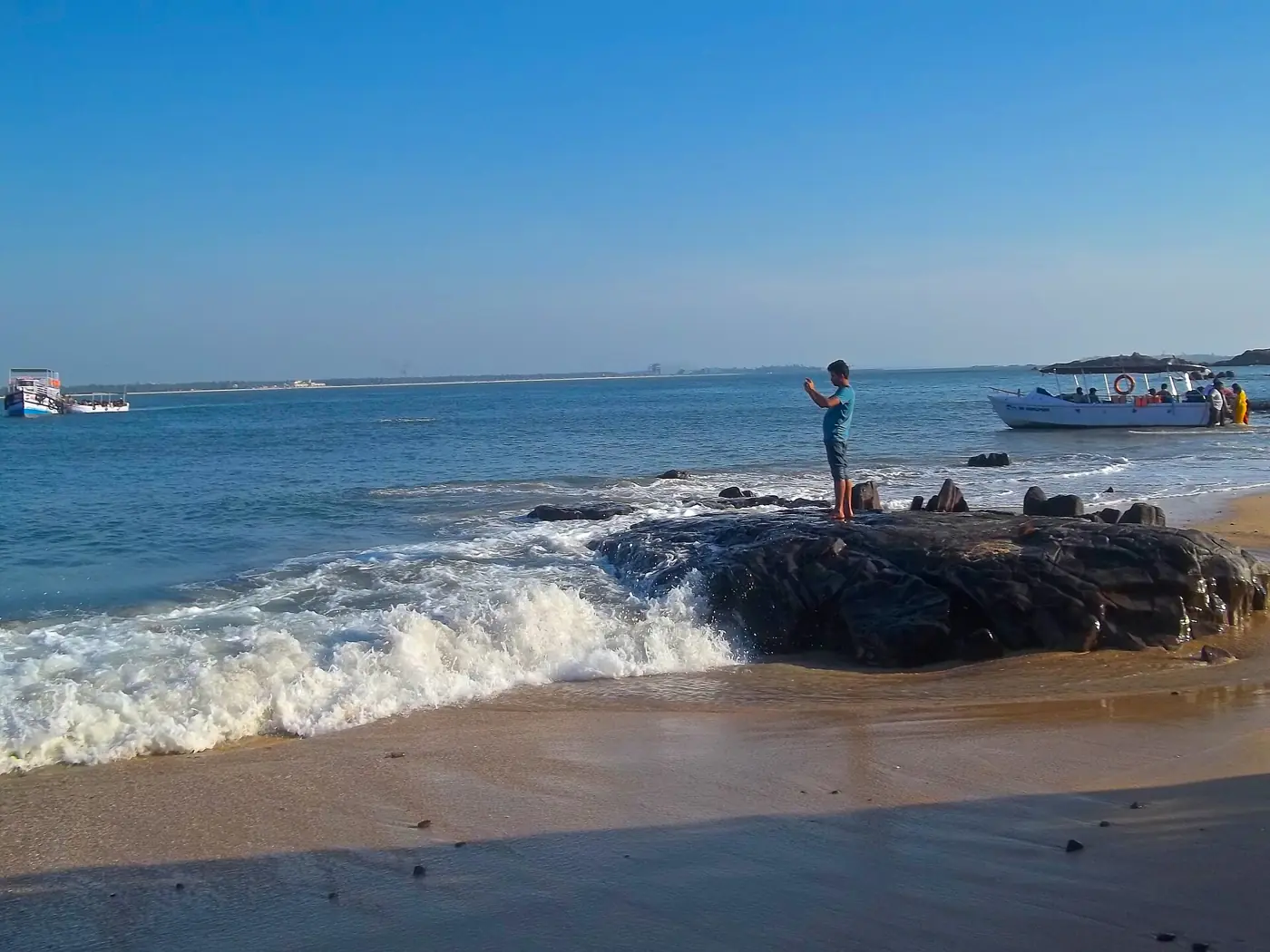
Basalt rocks and surf on the shore of St Mary’s Island off Malpe
Photo Subhashish Panigrahi · CC BY-SA 3.0
Island · Boat from Malpe · Oct–May

St Mary’s Island

The story told on this coast is that Vasco da Gama came ashore here in 1498, on his way to Calicut, and named the island for the Virgin Mary. But the island is far older than any story. It is made of basalt that cooled into perfect hexagonal columns tens of millions of years ago, when the land that is now Madagascar tore away from India and lava poured out along the break.

Today it is protected as a National Geological Monument, and walking across it feels like crossing the floor of a giant’s cathedral — grey columns stepping down into water so clear it looks like glass.

Sunset over the Arabian Sea at Sasihithlu beach
Photo Yuvaraj Puthran · CC BY-SA 4.0
Beach · estuary · 18 km · 30 min

Sasihithlu

At Sasihithlu the Shambhavi river runs out to meet the Arabian Sea, and between them lies a long finger of sand with calm river water on one side and rolling surf on the other. Stand at the tip and you can feel both.

It is where India’s surfing coast quietly began: the Indian Open of Surfing has been held on these waves, and on a good swell you will see boards out beyond the break. On a quiet evening you will see nobody at all.

The wide sand of Panambur beach in Mangaluru
Photo Lpp3535 · CC BY-SA 4.0
Beach · 27 km · 40 min

Panambur

Panambur is Mangaluru’s own beach — the one where families go on Sunday evenings, where the kites go up, where the camels and the ice-cream carts and the jet skis all compete for attention. Just beyond it is the New Mangalore Port, and the big ships wait offshore like patient buildings.

It is not a quiet beach and it does not try to be. It is a happy one — and seeing a city at play by its own sea tells you a lot about the place.

Unpack once. Come back to the sea every evening.
— SeaSwara House
Every faith this coast keeps

A temple, a chapel, a mosque, a basadi — often on the same street.

For centuries this coast was where the traders of the world came ashore, and every one of them stayed long enough to build. Hindu temples, Jesuit chapels, one of the oldest mosques in India and the Jain basadis of Moodbidri all stand within the same hour of road — and they are shared with visitors of any faith, or none, with real warmth.

Wherever you go: dress modestly, with shoulders and knees covered; leave shoes at the door; and check the timings before you drive, since prayer and puja hours come first. You will be welcomed.

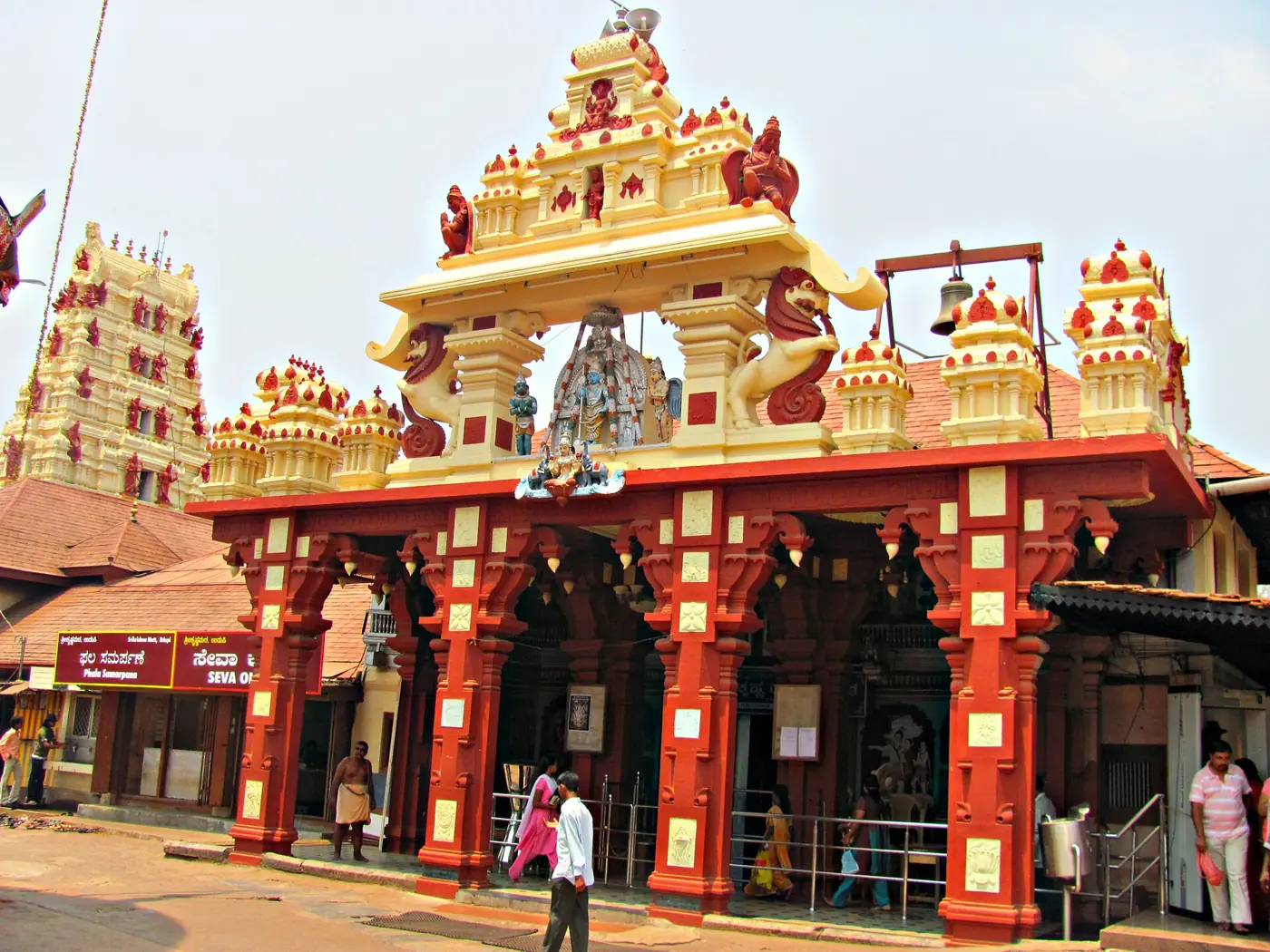
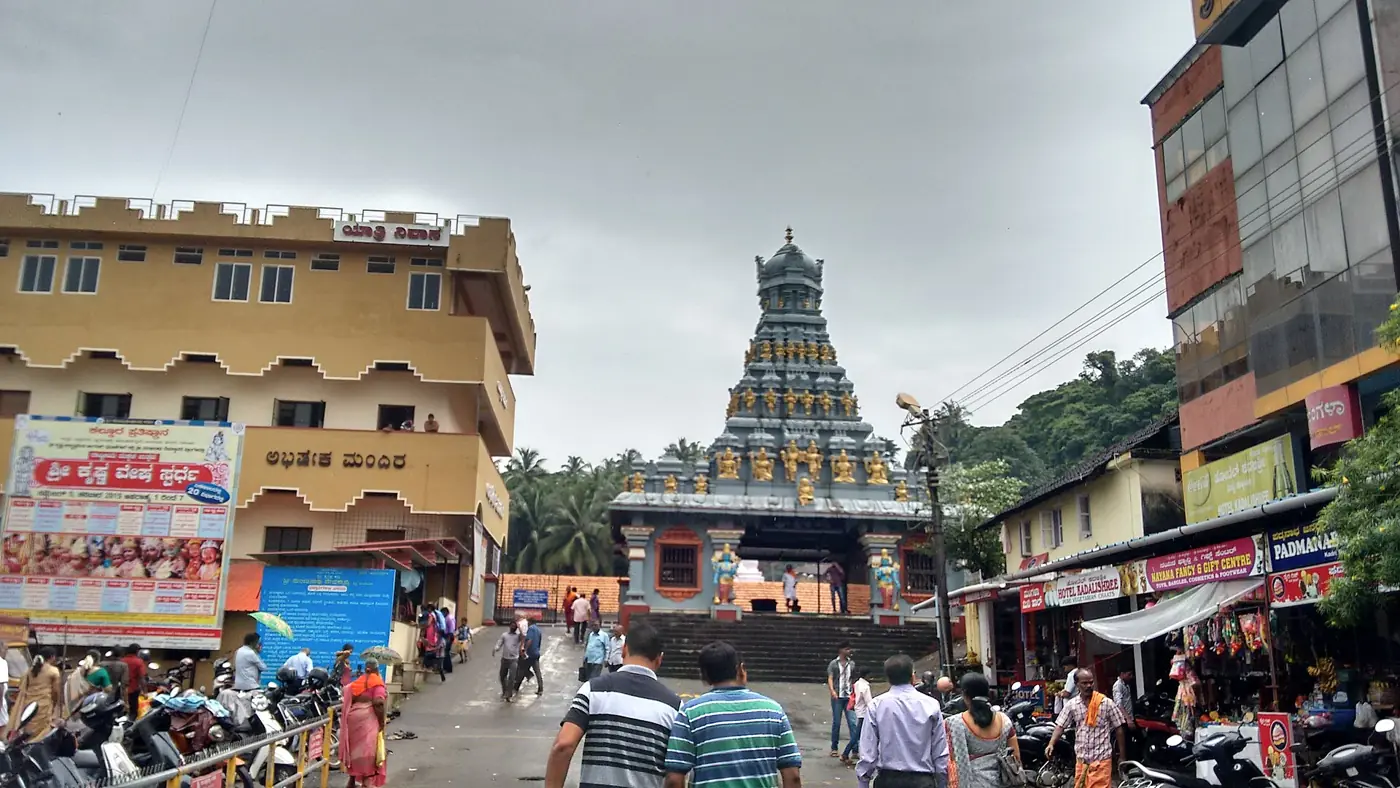
The painted gateway of the Sri Krishna Matha temple in Udupi
Photo Ashok Prabhakaran · CC BY-SA 2.0
Temple · 26 km · 35 min

Sri Krishna Matha, Udupi

In the thirteenth century, it is said, the philosopher-saint Madhvacharya was meditating on the shore at Malpe when a ship was caught in a storm. He calmed the waves, and the grateful captain offered him anything from his cargo. He asked only for a lump of sacred clay used as ballast — and inside it was an image of the child Krishna, which he carried to Udupi and installed himself.

There is a second story here that everyone in Udupi will tell you. Kanakadasa, a poet from a low caste, was refused entry to the temple. He stood outside and sang to Krishna — and the wall cracked, and the image turned around to face him. You still see Krishna through that small window today, the Kanakana Kindi.

Every two years the care of the temple passes, in a great festival called Paryaya, from one of eight monasteries to the next — as it has for more than seven hundred years. And Udupi’s temple kitchens gave the world what we now call Udupi food.

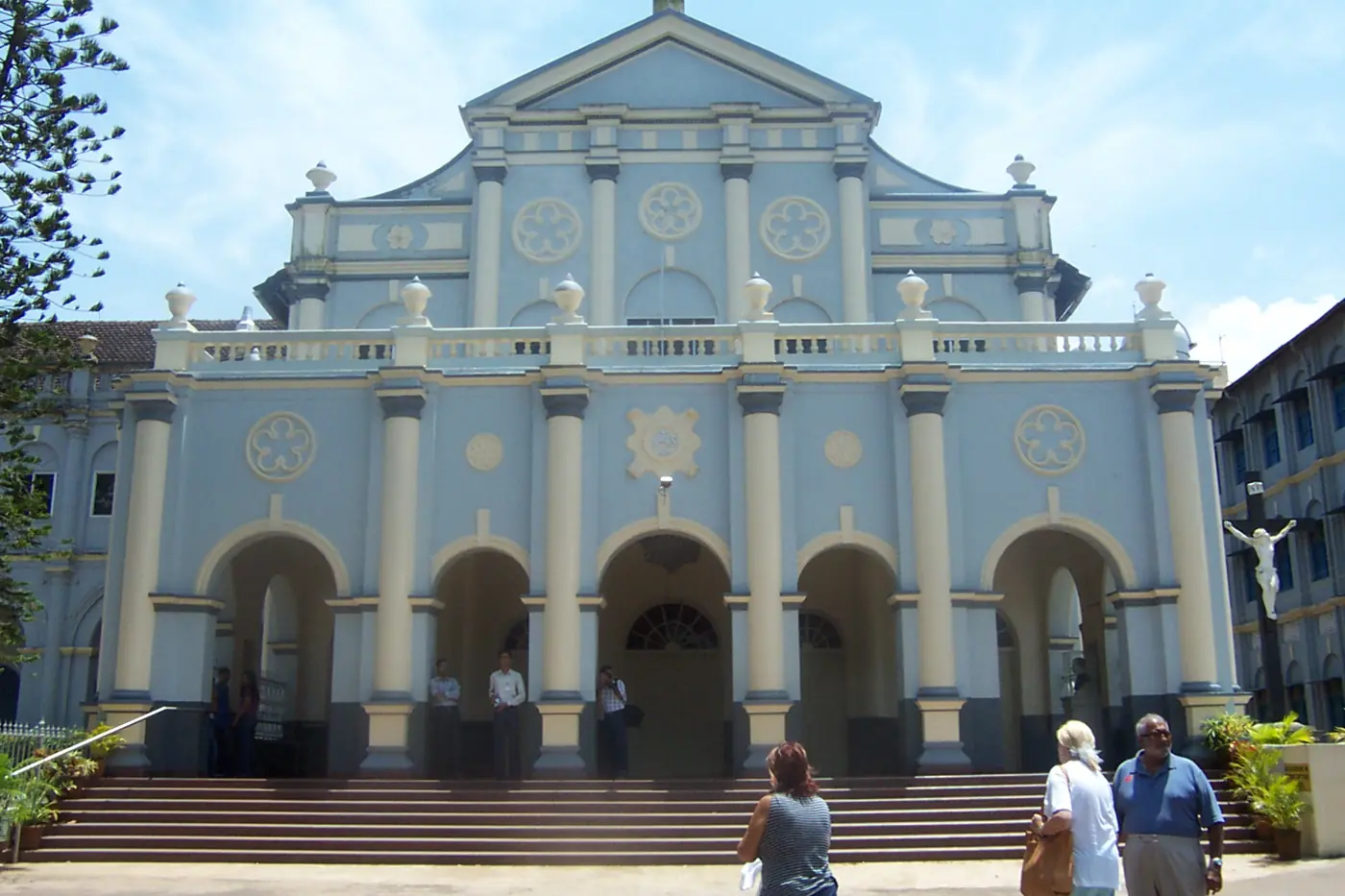
The pale blue façade of the St Aloysius Chapel in Mangaluru
Photo Haydn Blackey · CC BY-SA 2.0
Chapel · 36 km · 50 min

St Aloysius Chapel, Mangaluru

From outside, St Aloysius is a handsome college chapel on a hill. Then you step in and look up. Every inch of the walls and ceiling is painted — saints, angels, the life of Christ, the life of St Aloysius — in colour that has barely faded in more than a century.

It was the work of one man, Antonio Moscheni, an Italian Jesuit brother who arrived in Mangaluru at the end of the nineteenth century and spent years on scaffolding painting it. People call it the Sistine Chapel of India, and when you are standing inside it, the comparison does not feel like an exaggeration.

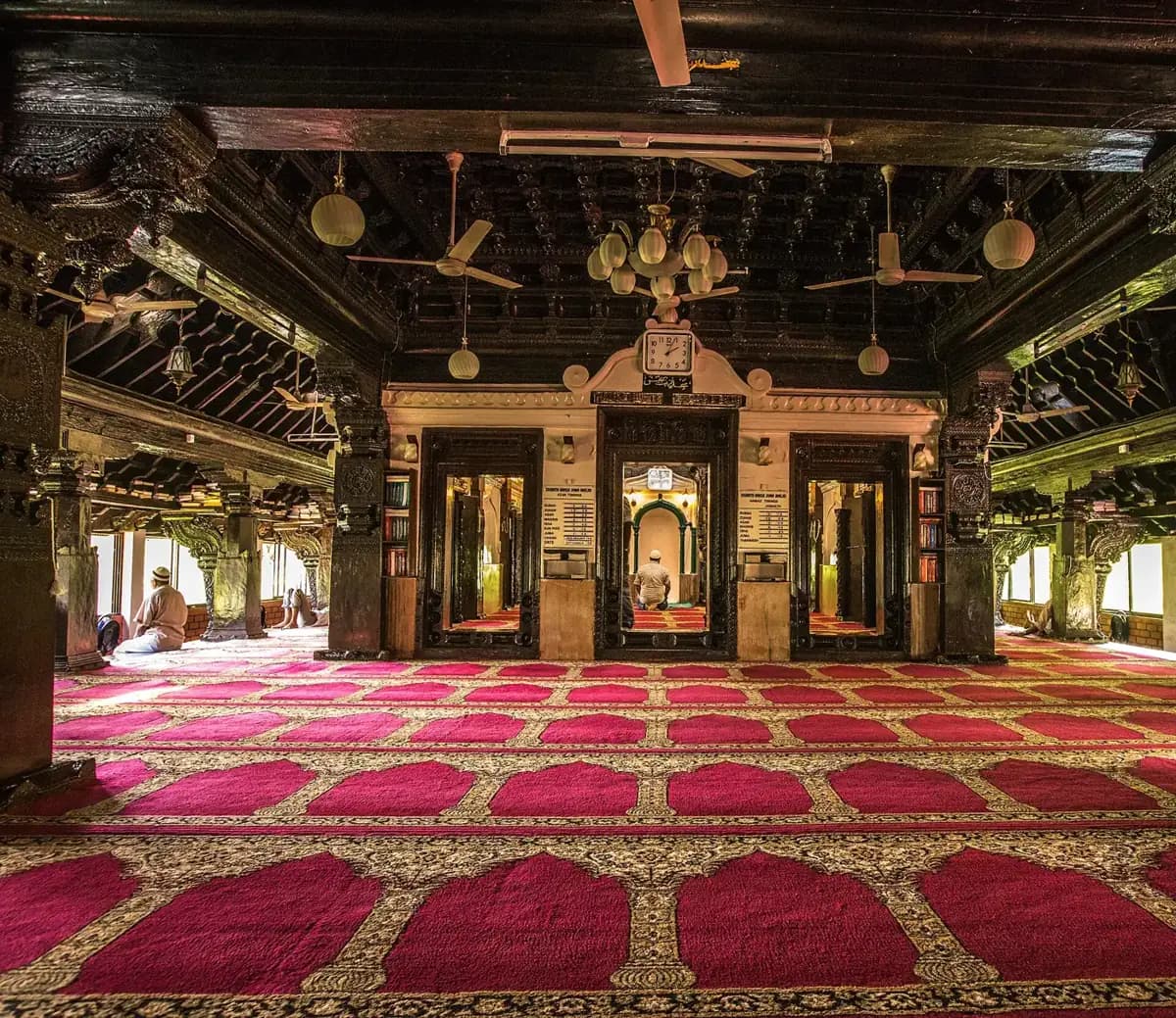
The carved wooden prayer hall of the Zeenath Baksh Juma Masjid in Mangaluru
Photo Krishna Mohan · CC BY-SA 4.0
Mosque · 35 km · 50 min

Zeenath Baksh Juma Masjid, Mangaluru

Long before Mangaluru was a city, Arab traders were sailing here for pepper, and Islam arrived on this coast with them. By tradition, the Zeenath Baksh Juma Masjid by the old Bunder harbour was founded in the seventh century by those early traders — which would make it one of the very first mosques in India.

Its prayer hall is a forest of carved wood: pillars and ceilings worked by hand in the style of this coast, not the domes and minarets you might expect. It is a reminder that this shore has always been a meeting place, and that it has welcomed people from across the sea for a very long time.

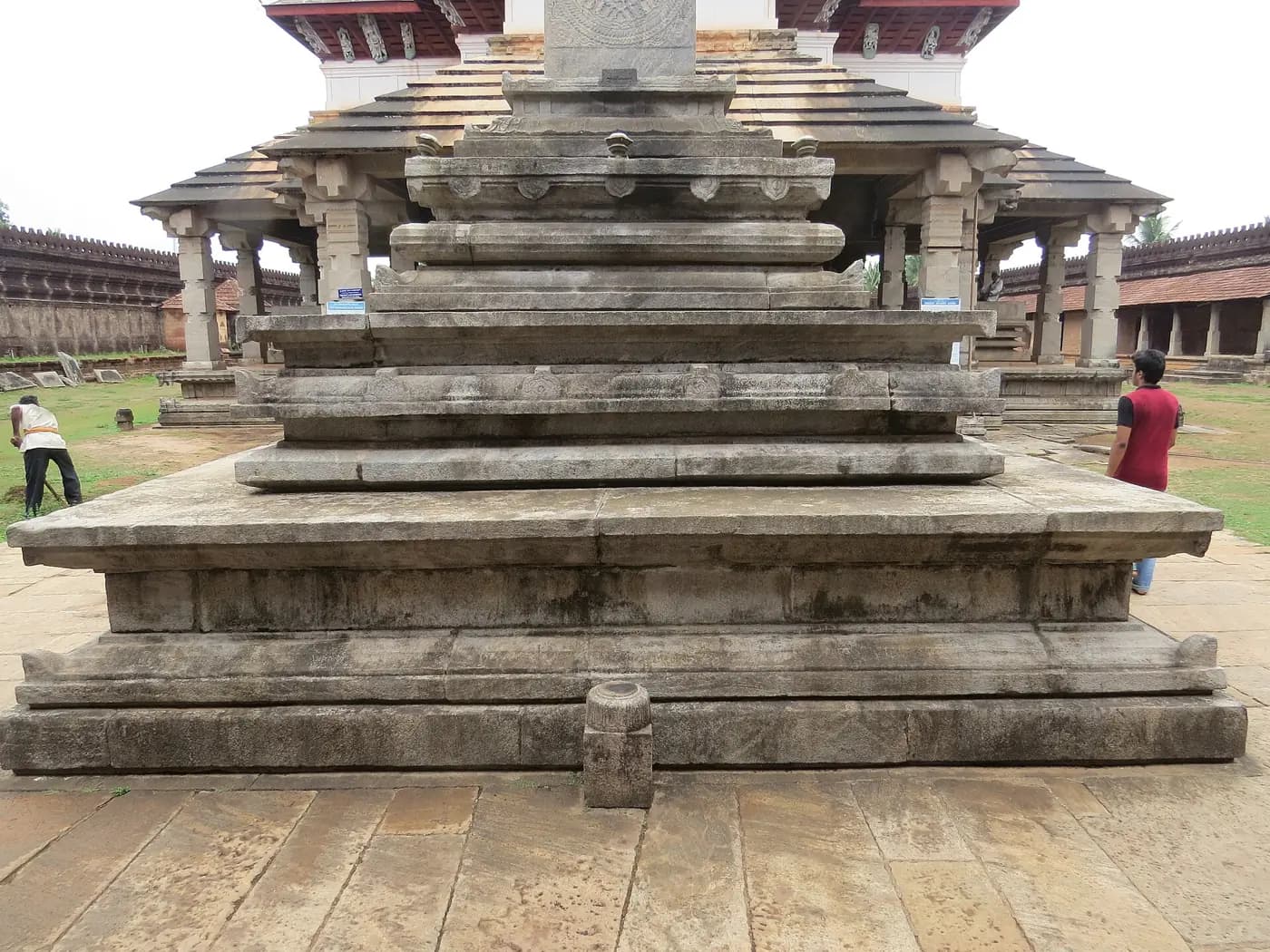
The stone pillar and terraced plinth of the Saavira Kambada Basadi at Moodbidri
Photo Vinayaraj · CC BY-SA 4.0
Jain basadi · 37 km · 50 min

Thousand Pillar Basadi, Moodbidri

Moodbidri was once the Jain capital of this coast, rich with scholars and merchants, and it is still called the Jain Kashi of the South. Its greatest treasure is the Saavira Kambada Basadi — the temple of a thousand pillars — built in 1430.

Walk slowly between the pillars and look closely: the carvings change as you go, and it is said that no two of the thousand are the same. There are dancers, animals, flowers, patterns that seem to move. It is one of the most peaceful places on the coast, and one of the least crowded.

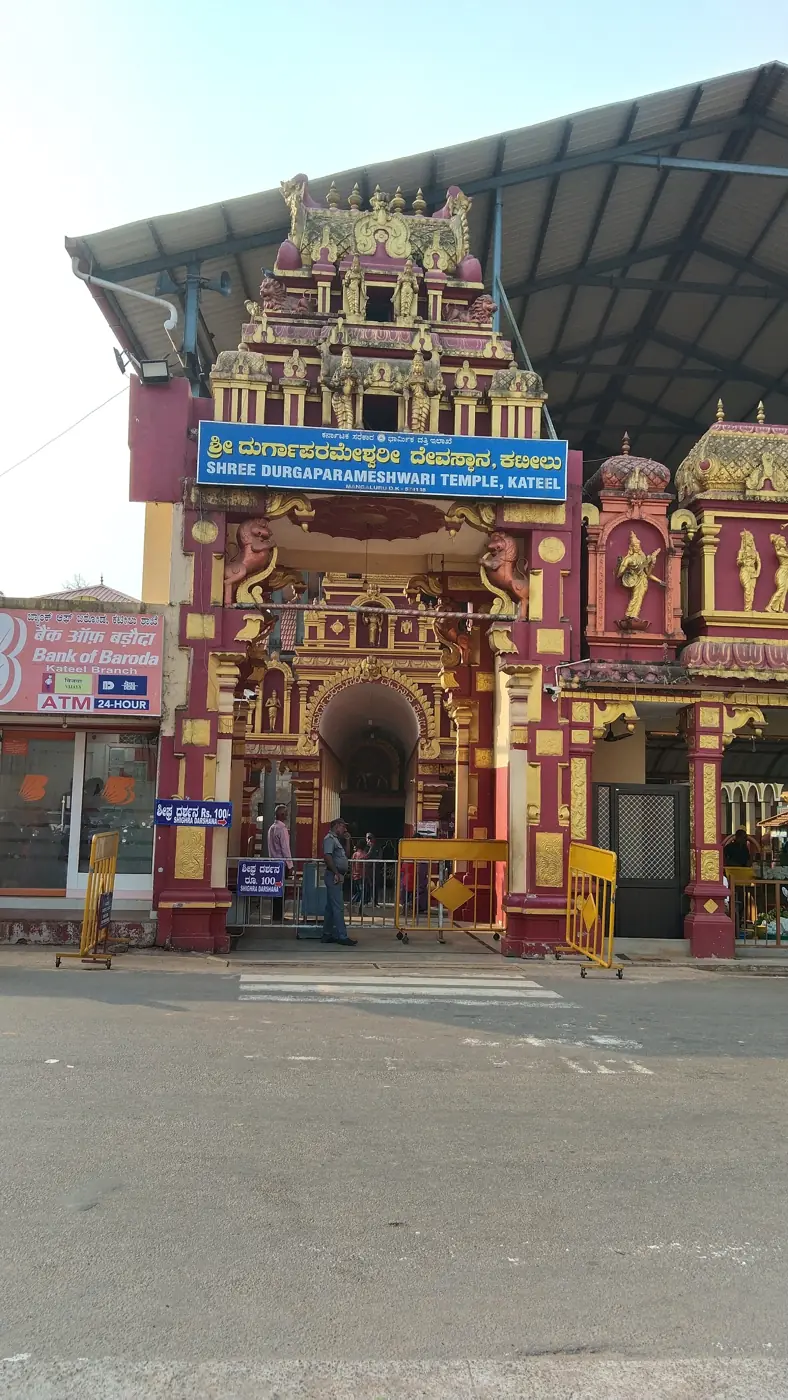
The gopuram of the Sri Durgaparameshwari temple at Kateel
Photo Hariprasad Shetty10 · CC BY-SA 4.0
Temple · 22 km · 35 min

Sri Durgaparameshwari, Kateel

The temple at Kateel stands on a small islet in the middle of the Nandini river, and the water parts around it on both sides. The legend is that the goddess Durga came here to destroy the demon Arunasura, taking the form of a swarm of bees — and afterward remained, as the river’s own protector.

Kateel is also the heart of Yakshagana, the coast’s great all-night dance-drama. Its troupes are among the most famous, and through the dry season they travel from village to village, performing the old epics from nightfall until dawn in costumes of gold and mirror-work.

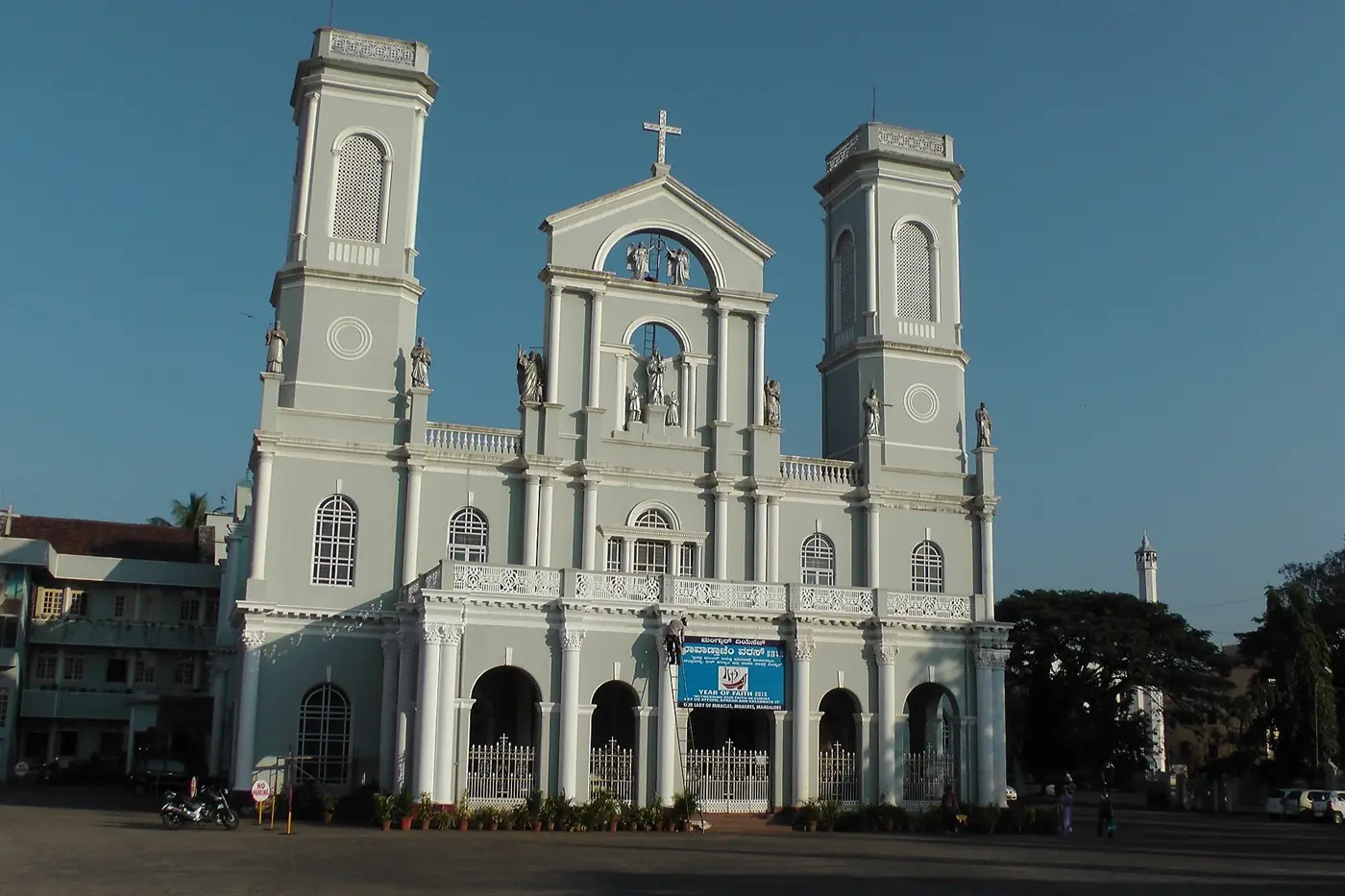
The twin white towers of Milagres Church in Mangaluru against a blue sky
Photo Harriet Vidyasagar · CC BY-SA 4.0
Church · 36 km · 50 min

Milagres Church, Mangaluru

The first church of Our Lady of Miracles was built here in 1680, when Mangaluru’s Catholic community was already old and proud. It was destroyed in the wars of the eighteenth century, rebuilt, and rebuilt again — the church you see today, with its twin white towers over Hampankatta, dates from 1911.

The Mangalorean Catholic community gave this coast its own language of food, music and celebration — sorpotel, sanna, the Konkani hymns, the Monti Fest harvest feast in September. Milagres is where you feel the heart of it.

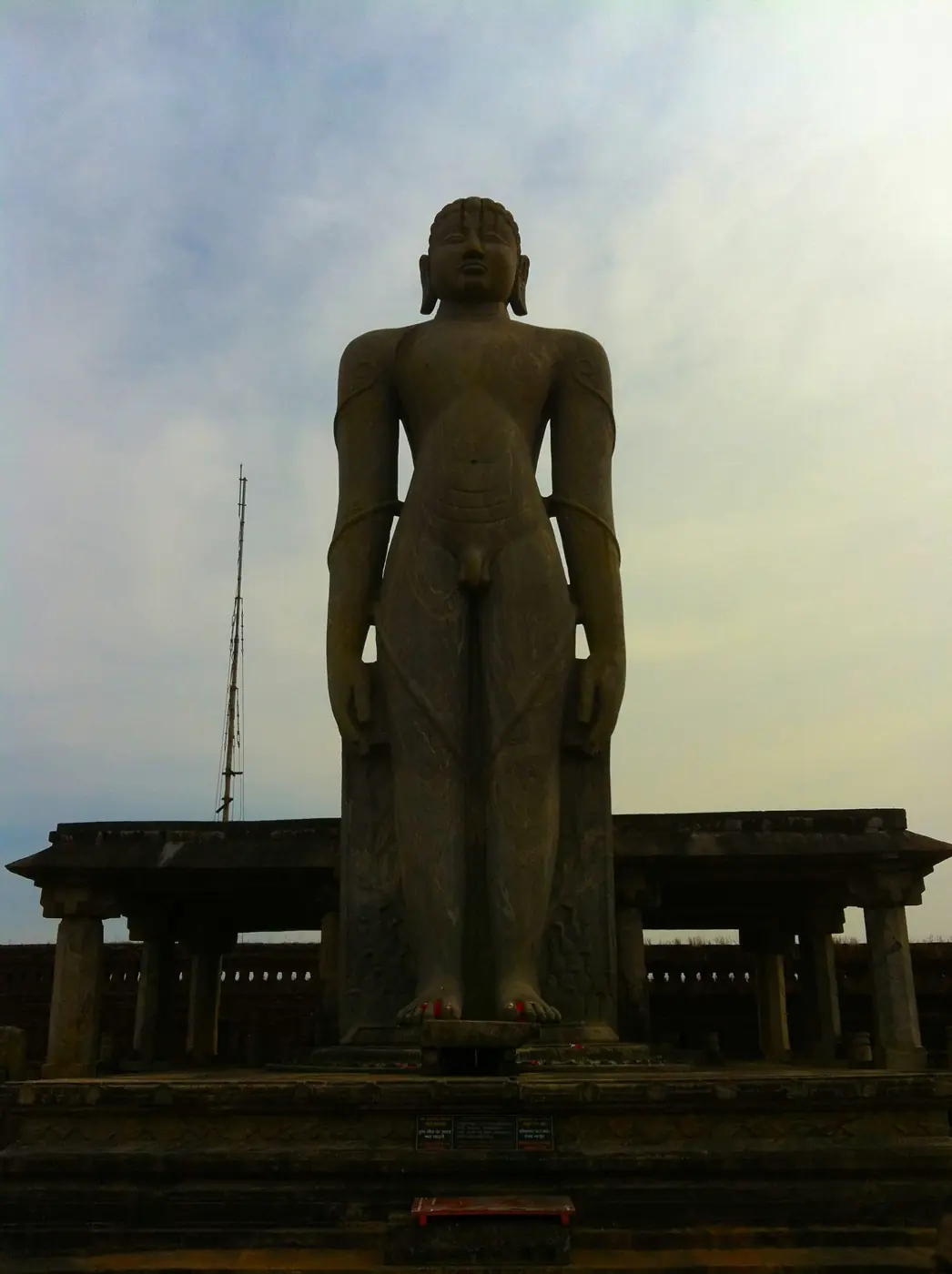
The monolithic Gommateshwara Bahubali statue at Karkala against the sky
Photo Subhashish Panigrahi · CC BY-SA 3.0
Monolith · 32 km · 45 min

Gommateshwara, Karkala

Bahubali was a prince who fought his own brother for a kingdom and won — and then, in the moment of victory, saw the emptiness of it and walked away. He stood in meditation so long, the story goes, that vines grew up around his legs and anthills rose at his feet.

At Karkala he stands in stone, thirteen metres tall, cut from a single granite boulder and raised on this rock hill in 1432. Look closely and you will see the vines climbing his legs. Once every twelve years, in the Mahamastakabhisheka, he is bathed from above in milk, saffron and flowers.

The gopuram of the Kadri Manjunatha temple in Mangaluru
Photo Ssriram mt · CC BY-SA 4.0
Temple · 34 km · 50 min

Kadri Manjunatha, Mangaluru

Kadri is among the oldest temples on this coast, and it carries a thousand years of layered faith. Its most precious image is a bronze of Lokeshwara dated to 968 — counted among the finest bronzes in South India — and the hill above it holds caves that tradition connects with the ascetics of the Natha tradition.

Behind the temple, springs run out through stone cow-heads into bathing tanks, and the water is said never to fail. Climb up past them for a view over the city.

Tulunadu at home

How this coast used to live.

Before the temples and the beaches there were the guthu manor houses, the paddy, the potters and the buffalo. Pilikula keeps a village of them standing, and it is the best single afternoon for understanding where you are.

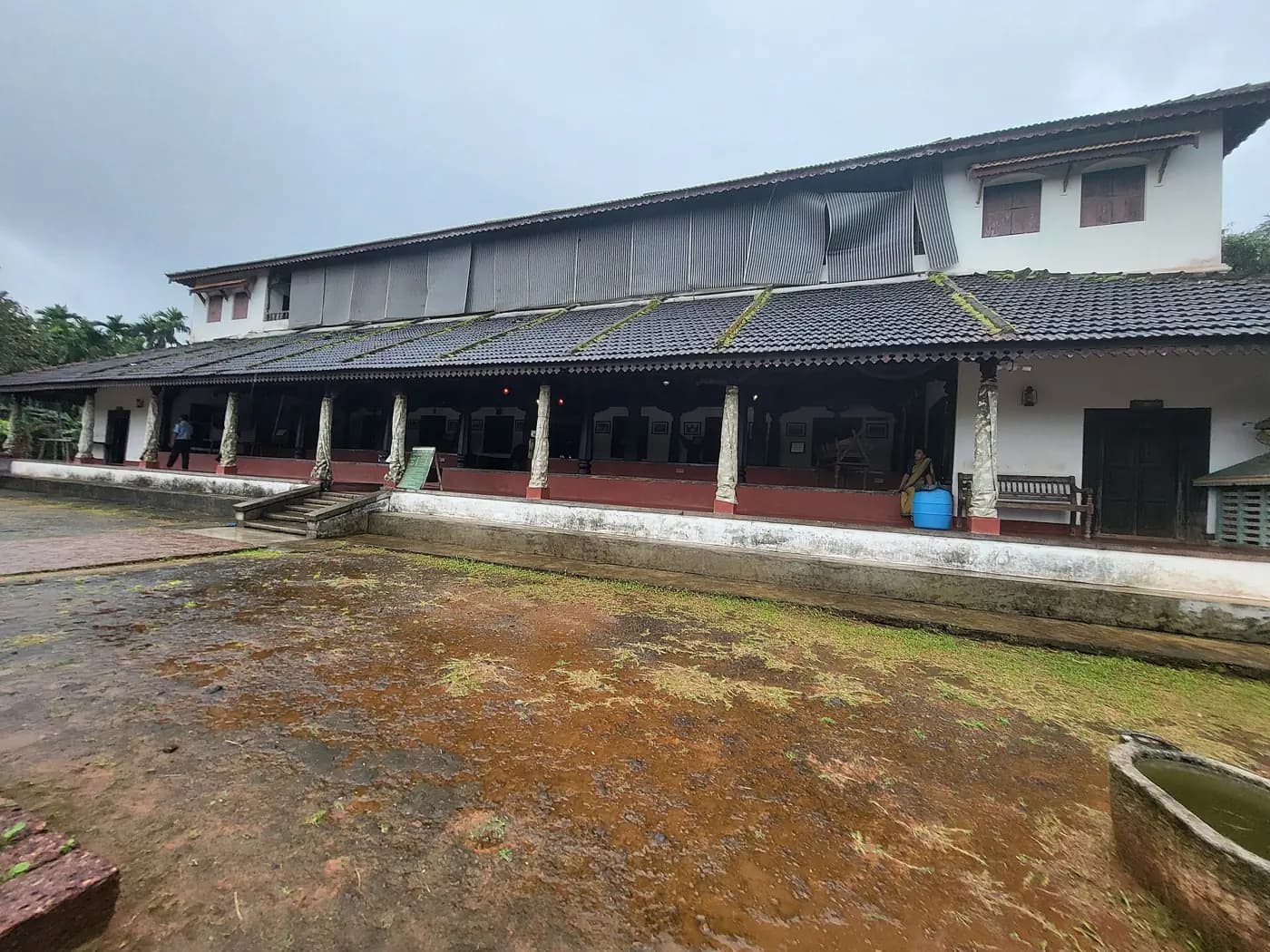
The tiled guthu manor house in the Pilikula heritage village
Photo Athulvis · CC BY-SA 4.0
Heritage · 40 km · 55 min

Pilikula Heritage Village

For centuries the great families of Tulunadu lived in guthu houses — wide manor homes around open courtyards, with sloping tiled roofs, carved wooden pillars and a shrine to the family’s guardian spirits. Whole clans lived under one roof, and the land around them was farmed, fished and celebrated together.

At Pilikula a guthu house has been carefully kept, with a working village around it — potters at the wheel, weavers at the loom, a lake, a botanical garden and a biological park beside. It is the best single afternoon for understanding where you are, and the story of the people whose coast this is.

What you will only see here

The coast is not a view. It is a way of living.

Tulunadu has its own language, its own gods, its own theatre and its own sport — and none of it was made for visitors. It happens anyway, in villages, fields and temple yards, and if you are here at the right time you are welcome to stand at the edge and watch. Ask us what is on while you are staying.

i.
Yakshagana
The all-night dance-drama of the coast: the old epics sung, drummed and danced from dusk to dawn in towering headdresses of gold and mirror-work.
Nov – Mayafter dark
ii.
Kambala
Pairs of buffalo racing through flooded paddy with a farmer running behind them — loud, muddy, joyful, and unlike anything else in India.
Nov – Marweekends
iii.
Pili Vesha
The tiger dance. Men painted from head to toe in stripes dance through the streets of Udupi and Mangaluru to the beat of the drums during the festival season.
Dasara · Janmashtamiin the streets
iv.
Bhuta Kola
The night-long ritual in which the guardian spirits of a village are honoured, through a dancer, in firelight. Sacred to the families who keep it; watch with respect.
Dry seasonby invitation
v.
Mangalore tiles
The red clay roof tiles that cover the whole coast were first made here in the nineteenth century and shipped across the world. Look up in any village — you are looking at a Mangaluru invention.
Everywherelook up
From the house

Three days out, and back by sunset.

Padubidri sits almost exactly halfway between Udupi and Mangaluru, so everything on this page is a day out and home for dinner — you unpack once. These are the routes we give guests most often.

i.
North · temple, harbour, island
Udupi Sri Krishna Matha at dawn and the temple breakfast; Malpe harbour as the boats come in; the boat to St Mary’s Island (October to May); Kaup lighthouse for sunset on the drive home.
Full dayabout 90 km
ii.
Inland · the river and the rock
Kateel’s island temple in the morning, the Thousand Pillar Basadi at Moodbidri, and the climb to the Gommateshwara monolith at Karkala in the afternoon light.
Full dayabout 100 km
iii.
South · the old city and the river mouth
St Aloysius Chapel’s frescoes, the Zeenath Baksh mosque by the old harbour and lunch in Mangaluru; Pilikula in the afternoon; Sasihithlu for sunset where the river meets the sea.
Full dayabout 110 km
Before you set out

What travellers ask us about the coast.

01What are the best places to visit near Udupi and Mangalore?

On the shore: Kaup lighthouse, Malpe beach, St Mary’s Island, Sasihithlu where the river meets the sea, and Panambur. Places of faith: the Udupi Sri Krishna Matha, St Aloysius Chapel and Milagres Church, the Zeenath Baksh Juma Masjid, the Thousand Pillar Basadi at Moodbidri, Kateel and the Gommateshwara monolith at Karkala. And the Pilikula heritage village. Padubidri is halfway between Udupi and Mangaluru, so all of them are day trips from SeaSwara.

02How far is the Udupi Krishna temple from SeaSwara?

About 26 km and 35 minutes north on NH-66. Go at dawn for the first puja and the quietest darshan, and stay for the temple meal.

03When can you visit St Mary’s Island?

Boats run from Malpe from roughly October to May and stop during the monsoon, when the sea is too rough. Go in the morning, carry water, and note that there is no shade or food on the island.

04Which beaches near Udupi and Mangalore are good for swimming?

Padubidri is a Blue Flag beach with lifeguards in season; Sasihithlu has the calmest water on this stretch. Everywhere on this coast, swim only between the flags in daylight and not during the June-to-September monsoon — the undertow is strong.

05Can visitors of any faith visit the temples, churches and mosques here?

Yes — almost all welcome respectful visitors. Cover shoulders and knees and leave shoes at the door. Some temples, including Udupi, ask men to remove their shirts in the inner sanctum; mosques welcome visitors outside prayer times; churches ask for quiet during Mass.

06Where should I stay to see Udupi and Mangalore?

Halfway between them. SeaSwara is at Padubidri, 35 minutes from Udupi and 40 minutes from Mangaluru airport, on a Blue Flag beach — so you can day-trip in both directions and come back to the sea each evening, without packing twice.

Everything on this page is a day out from the house and home for dinner. Six suites on the Blue Flag beach at Padubidri, breakfast included.

Check dates and rates